Place name
“The Lion’s way” UNESCO Venetian Fortresses cycling route
Route
Route between Palmanova, Peschiera del Garda, and Bergamo
An experience that intertwines nature, culture and landscape.
A cycle route that crosses diverse and fascinating landscapes.
Among hills, villages and plains, an experience that invites you to slow down and let yourself be surprised.
Tourist introduction
Welcome to La Via del Leone (The Lion’s Way), the cycle route that connects three unique gems of Venetian heritage: Bergamo, Peschiera del Garda and Palmanova. A slow journey, to be enjoyed at the pace of the turning wheels, among green hills, sparkling waters and plains
stretching to the horizon.
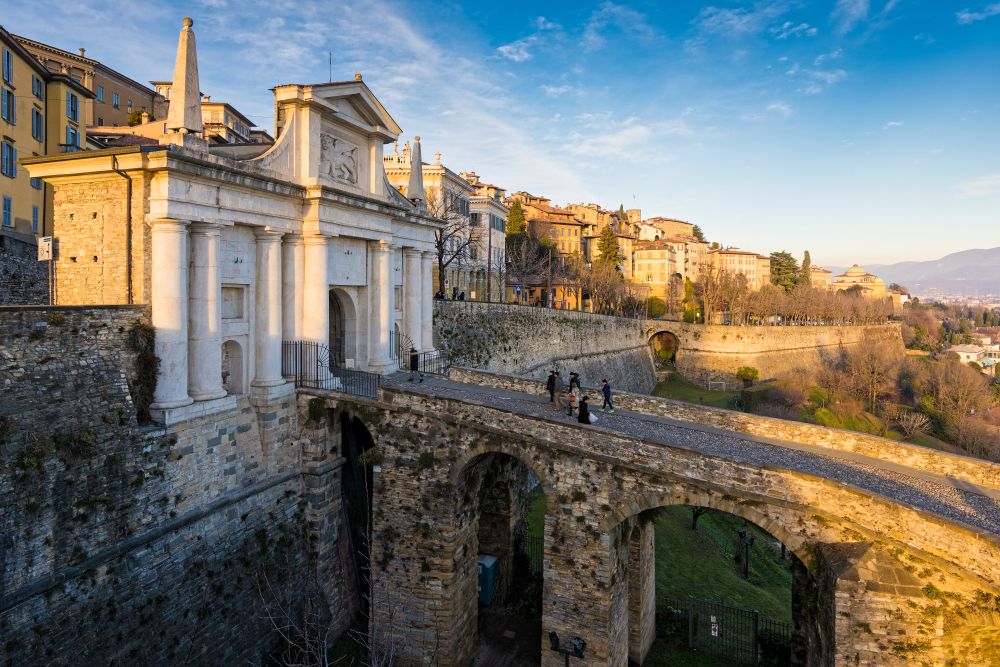
In Bergamo, the majestic Venetian walls embrace the upper town, guardians of centuries of history and beauty.
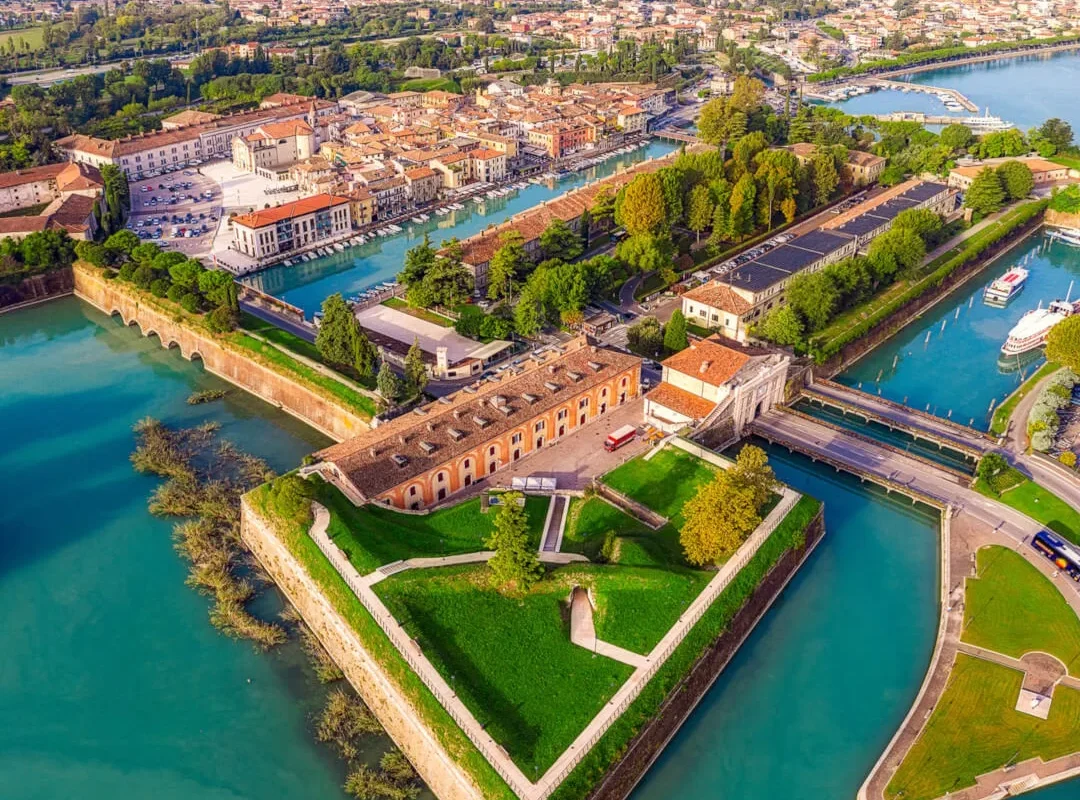
In Peschiera del Garda, the fortress on the water, designed by the Serenissima, is reflected in the lake, inviting you to stop among the ramparts and canals.
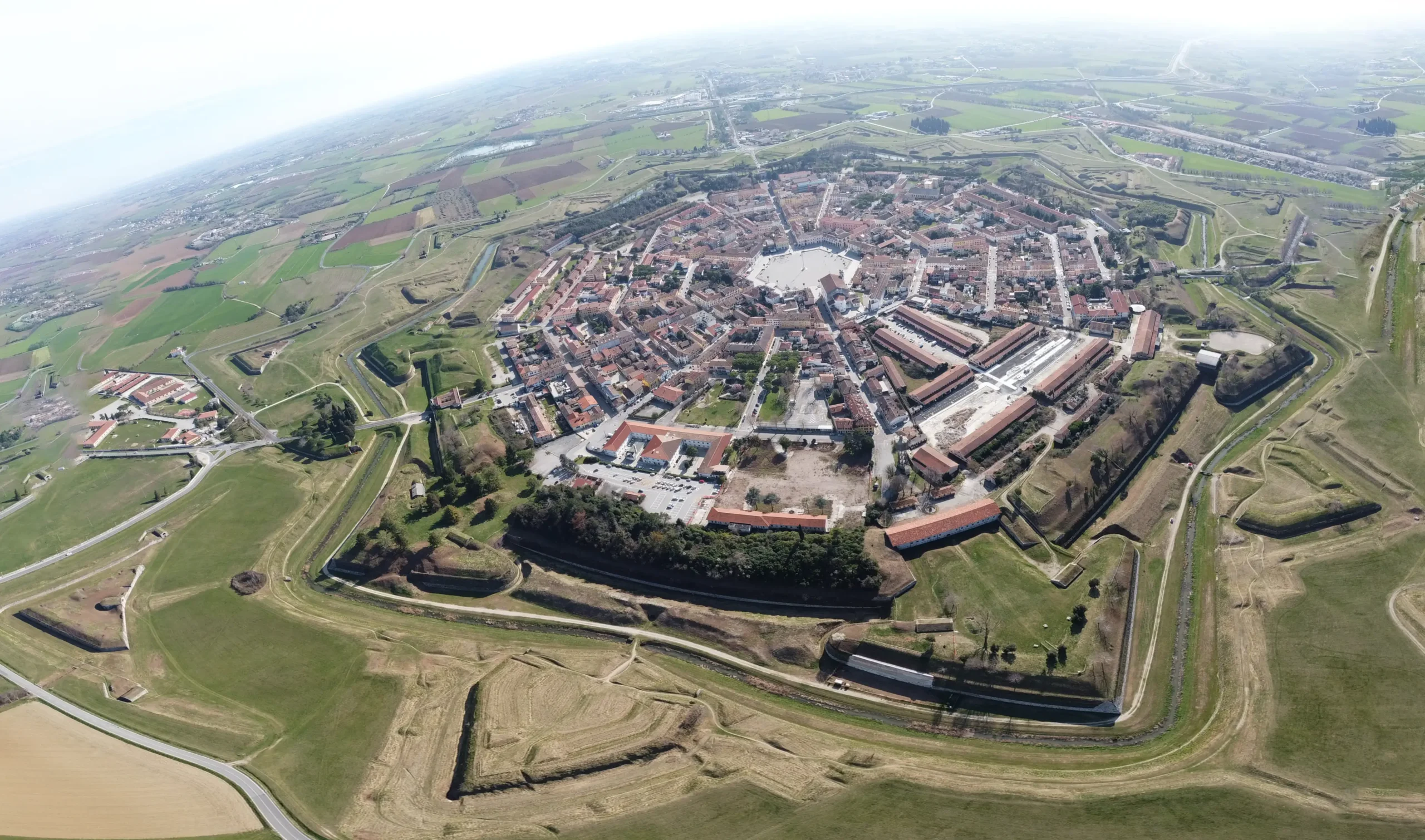
Finally, Palmanova, the star-shaped city, a perfect symbol of fortification art, surprises with its harmonious geometry and its atmosphere suspended in time.
La Via del Leone is not only an itinerary of defence and memory, but an experience that intertwines nature, culture and landscape, giving travellers the pleasure of slow discovery, following in the footsteps of the lion of St Mark, who watched over these lands for centuries.
On the paper material and project website, you can download a track in GPX that you can download and use to drive between the three cities.
Itinerary – Places to visit
Palmanova
The only example of a planned city that has remained intact in its nine-pointed star shape, Palmanova is one of the most important examples of modern military architecture.
The layout, designed in 1593 by engineers and treatise writers in the service of the Venetian Republic to defend Friuli from Turkish incursions and Habsburg ambitions, consists of three concentric circles: two built by Venice, with nine bastions and as many ravelins, and a third, outer circle with nine lunettes, commissioned by Napoleon in the 19th century.
The fortress city was declared a National Monument in 1960, recognised as a UNESCO World Heritage Site in 2017 and included among the Most Beautiful Villages in Italy in 2018.
Today, Palmanova is a fascinating tourist destination where history, culture and nature come together in a unique heritage.
Peschiera del Garda
Its strategic position on Lake Garda has marked the history of Peschiera del Garda, a centre of trade and military fortress since ancient times, which became a UNESCO World Heritage Site in 2017. The Romans recognised its geographical importance and, in the following centuries, the town became an important fortified centre under the Visconti, Gonzaga and, above all, the Republic of Venice, which expanded its defences, transforming it into an example of military architecture.
It later became part of the Austrian “Quadrilatero” and was the scene of the wars of independence, passing to Italy in 1866.
The name refers to the abundance of fish in the waters, celebrated by its crest with two eels. Today, Peschiera is a charming tourist destination that combines history, landscape and recreational activities on the lake with ramparts, historic streets and waters, guardians of a heritage of art, culture and tradition.
Bergamo
Bergamo has ancient origins, founded as a Roman military colony in 49 BC under the name Bergomum.
Over the centuries, the city underwent various periods of domination, from the Visconti to Venetian control in the 15th century, during which time it became a thriving cultural and artistic centre. In 1797, after the fall of the Republic of Venice, it passed to France and in 1805 was incorporated into Napoleon’s Kingdom of Italy, before passing to the Austrian Empire after Napoleon’s defeat. During the Second World War, it suffered damage and occupation, but in the 1950s and 1960s it was rebuilt with the new district of Città Bassa. With the Italian Republic of 1946, it became part of Lombardy. In 2017, the imposing Venetian Walls were officially recognised as a UNESCO World Heritage Site.
Today, Bergamo is a popular tourist destination for its history, art and landscape, where the Upper Town and Lower Town recount centuries of culture and tradition.
Zadar (Croatia)
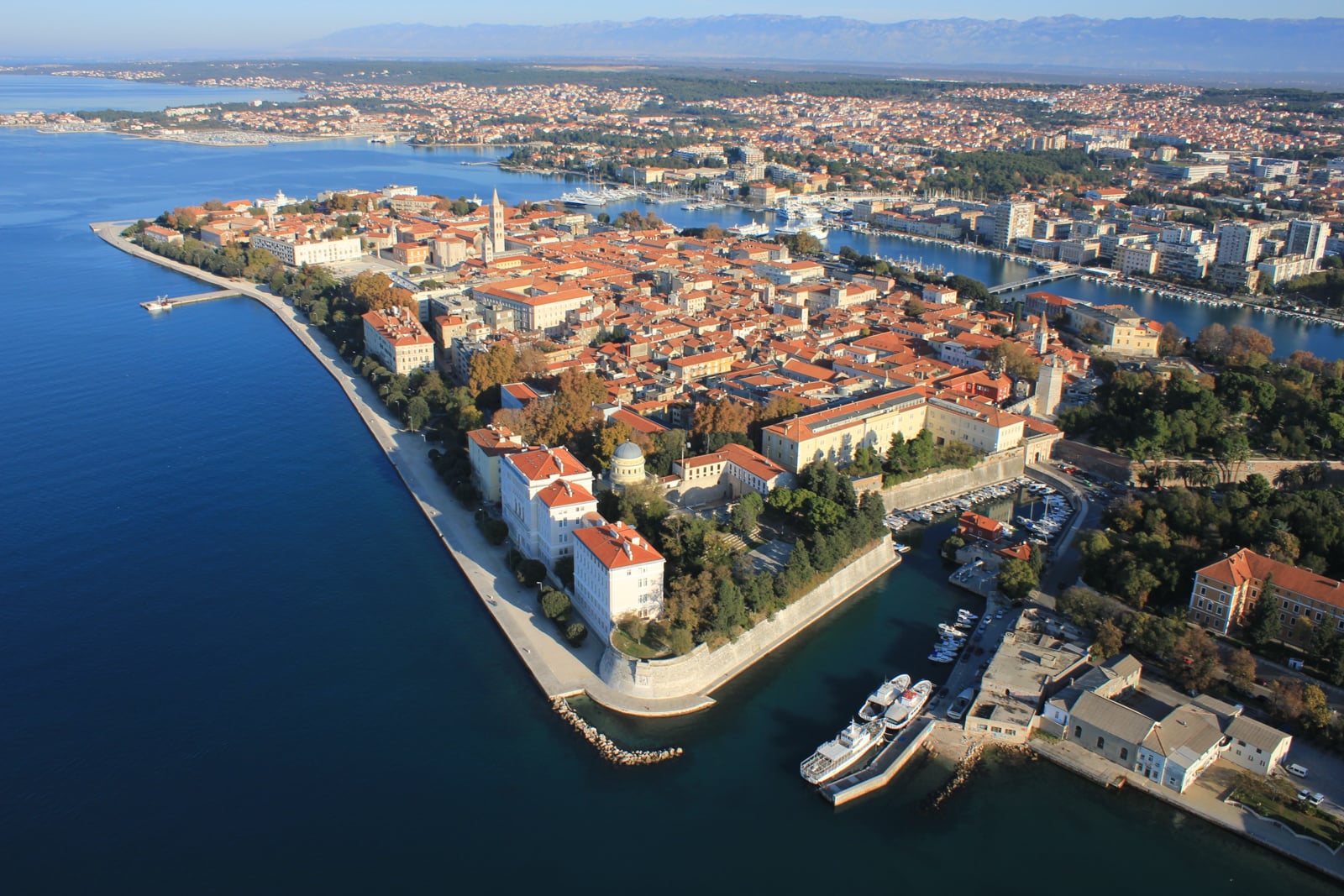
An ancient fortified city on the Adriatic coast, Zadar preserved a heritage that ranges from Roman ruins, including the Roman Forum, to medieval architecture, such as the Church of St. Donatus, and contemporary works such as the Sea Organ and the Sun Salutation.
With its ancient walls, secluded beaches and lively squares, it is a popular tourist destination all year round.
Šibenik (Croatia)
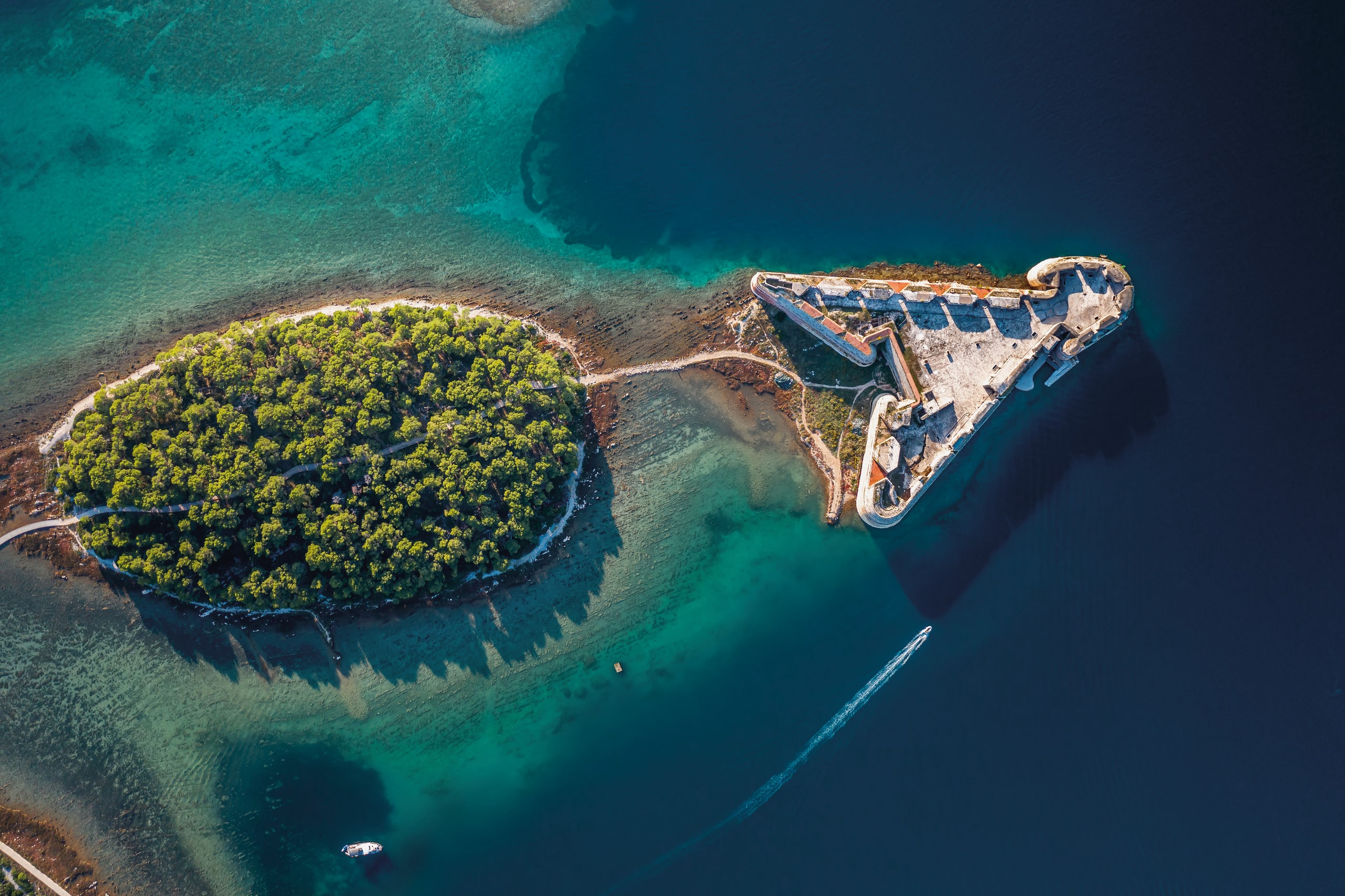
Šibenik, a historic town in central Dalmatia, is home to the Fortress of St. Nicholas, built in the 16th century by the Republic of Veniceùon the island of Ljuljevac.
A rare example of a triangular Renaissance fortification and a UNESCO World Heritage Site since 2017, it offers significant historical, cultural and natural interest.
Cattaro/Kotor (Montenegro)
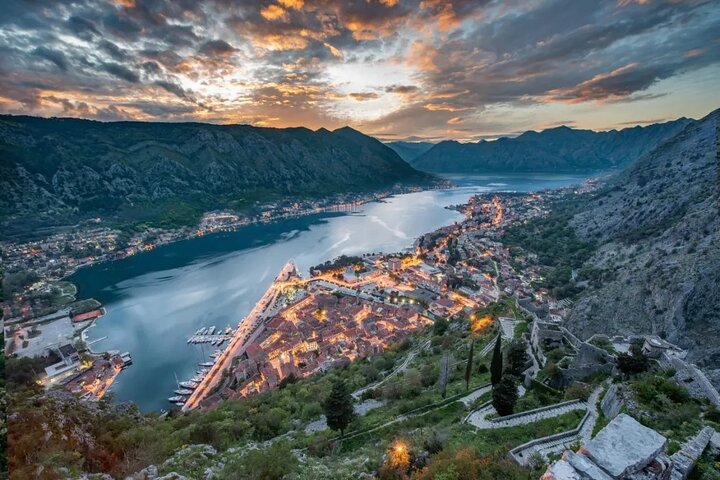
Cattaro (now Kotor), a fortified city on the Adriatic coast of Montenegro, is known for the picturesque natural fjord of the Bay of Kotor, a UNESCO World Heritage Site since 2017 for its cultural and architectural value.
The town combines historical heritage and scenic beauty, establishing itself as an attractive destination that can be enjoyed in every season.
Duration
The experience can last several days if you choose to cycle the entire itinerary connecting the three fortified cities.
The complete experience across the three fortresses takes approximately 6 hours, including travel by car.
Openings
The experience can be enjoyed freely and free of charge every day, at any time.
Where
The route can start from any of the three cities before continuing to the others. Departure from Palmanova is recommended.
The itinerary is available online at:
thevenetianfortresses.com/itinerario-in-bici/
Price
Free access.
Accessibility
Depending on the available equipment, the experience is accessible for visitors with motor disabilities, visitors with sensory disabilities accompanied by an assistant, and visitors with intellectual and psychological disabilities
Descriptive brochure
Download the brochure dedicated to this cycling route by clicking here